Ordinary life — if observed with heightened attention — is already mythic, already operatic, and always dangerous.

VIVIENNE’S EYES

The bells on the door tinkle; she steps inside to the sound of strangers’ laughter and the smell of fried food. A fork clatters against a plate, a malt glass slams too hard on the counter, the smoky waitress shouts “Order up!” to the cook in his grease-stained apron.

And through it all I feel her presence, feel the room tilt as she turns toward us.

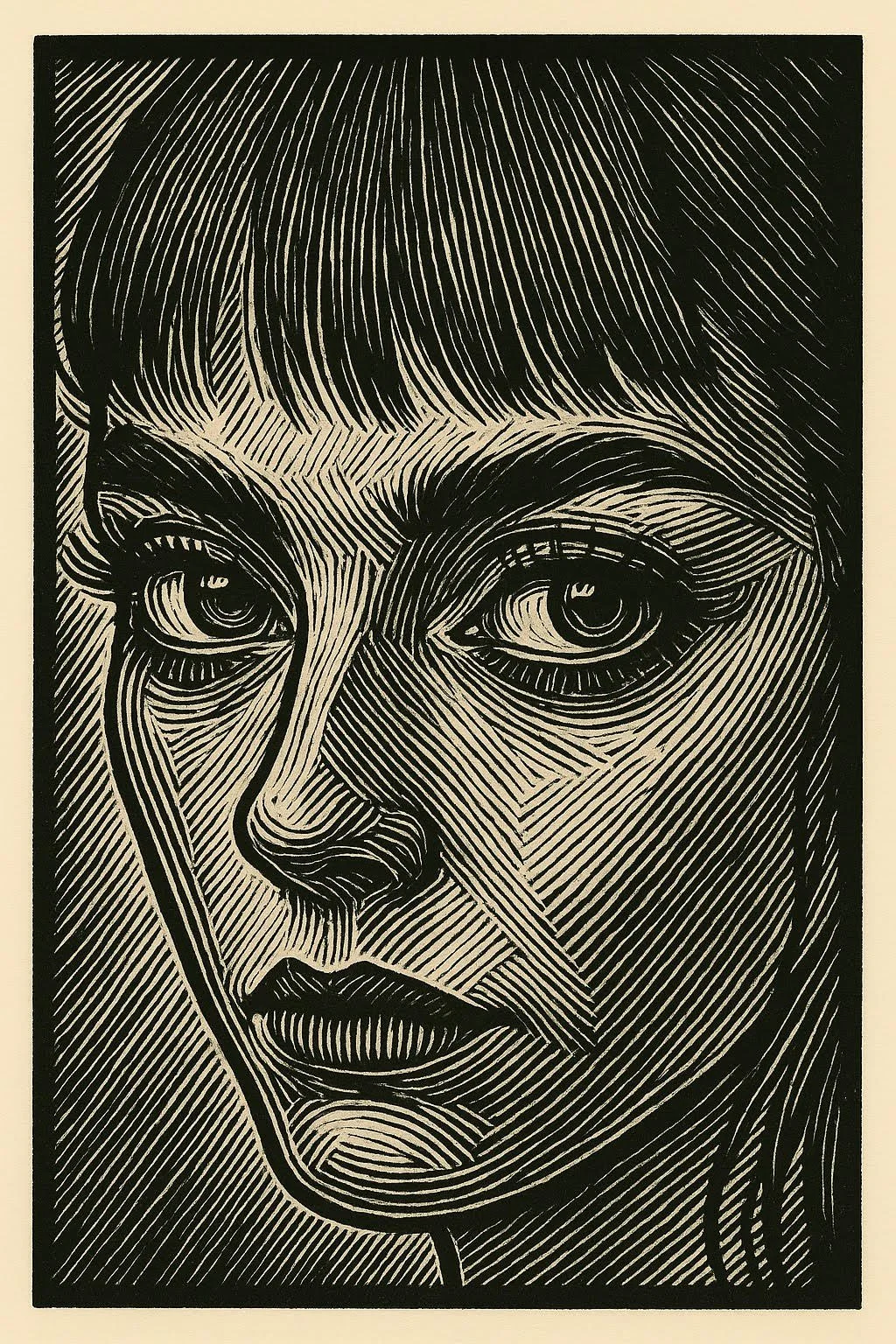
Her eyes burn into me, and oh my God, those eyes . . .

How shall I describe to you Vivienne’s eyes?

They are not easy eyes — neither soft and warm like a mother’s, nor exalted and lit like a lover’s. Sooty lashes, almond in shape, haunted, obsidian-dark; intelligent, unyielding, fixed. Her smile never lands there and doesn’t now, as she approaches with solemn composure, surveying the room with her weighted gaze — as though each face were a ledger to be read, a calculation silently tallied, nothing escaping the relentless arithmetic of her attention.

This is no fiery seductress.

She is Justice without the blind.

Her eyes hold no sparkle, only gravity and perception —

— all-seeing, unfeeling, feral.

Awake.

Like me.

One of my kind.

SAFE PRIME

“My father was once a brilliant mathematician.

I remember my mother and I picking him up after lecture, walking into a classroom reeking of Axe body spray and fear of abstract algebra. The blackboards would be covered in numbers and letters and symbols meeting together in a savage dance, as mysterious to behold as any cabbalistic threat would have been to hear; and my mother had always laughed and said: “Greg, no one can engineer a headache quite like you.”

Mom’s gone; Dad is 79 now; he lives with us.

We talk every day about the numbers.

He’s become very particular about them.

Agitated, really.

He doesn’t like the primes, for instance, except for five. Five is a safe number, as are any of its denominations — those are actually the very best numbers, followed by the evens.

The odds are dreadfully suspicious, unless they end in seven. The threes must be watched, but they’re small. The nines? Oh, no. They’re the very worst number. Nines are big. Nines are almosts. Nines are . . . well, they’re just trios of threes, and he doesn’t particularly like the threes. Threes are primes, and odds, and he doesn’t like the way they fit into nines.

Three times!

It upsets him.

I tell him I’m sorry.

We’ll have this same conversation later today.

And I’ll think:

My father won the Leelavati Award . . .

 . . . and now he’s afraid of the numbers.”


A CONSPIRACY OF FATE

“I don’t want to be associated with the story I’m about to tell, and short of wearing a mask to our session, I saw no other way to go about this.”

THE FUNERAL OF CATHERINE STARK

“In the previous week, the nightmare had taken on proportions previously unimagined, and now she stood torn between her mother, who blamed her for Catherine (albeit not for the right reasons) and Catherine’s husband, who did not blame her (but only in his ignorance). The guilt and burden of her secret was an anchor, dead weight around her ankles.

And now having lost Catherine, Jane was desolately alone.”

THE PARDON

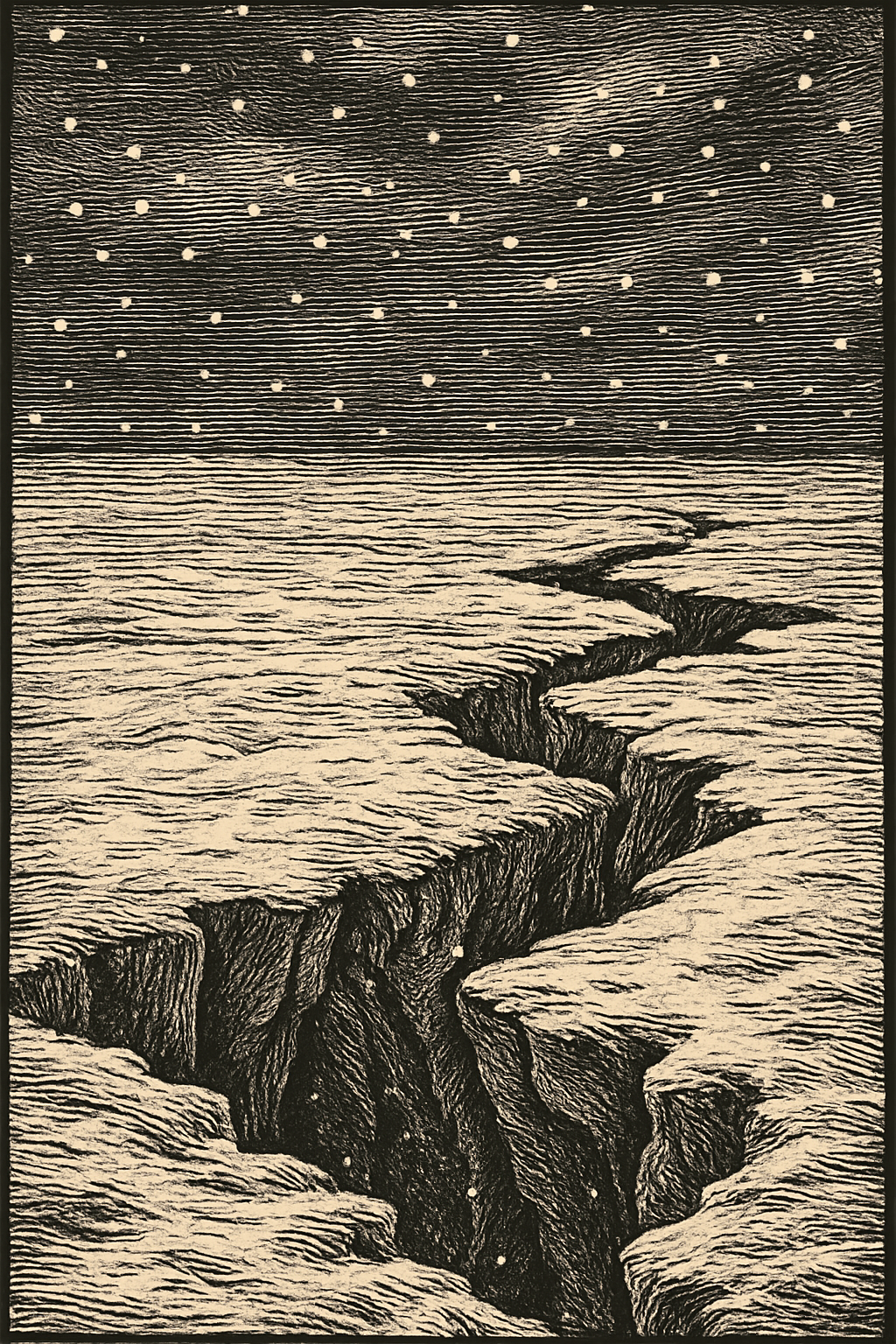
“ . . . He dreamt of cold places, vast steppes, cascading avalanches. He dreamt of steaming, ice-rimed cenotes bathed in blackness and phosphorescent glow, and tiny invisible cracks that yawned into enormous fissures, and endless mazes of bottomless crevasses. And even in the dream he’d marveled, for how had all these dangerous things been so cleverly concealed beneath a flawless field of driven, virgin snow?”

LODESTAR

“He needn’t say more; the soldier understood his meaning instantly. Yes, I’ve disarmed you, but I offer you something more valuable than rubies. Do you accept?”